Introduction to FODMAP
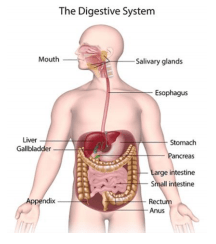
But how are FODMAPs significant in regard to digestion? Research suggests that dietary FODMAPS may be increasing intestinal symptoms by increasing the water volume, colonic gas production from rapid fermented bacteria and intestinal motility in the small intestine. The small intestine is where all the digestion and absorption of nutrients occur. Additionally, it is where it receives pancreatic secretions and bile via the hepatopancreatic duct. The pancreatic secretion and bile further aid in nutrient digestion and absorption. However, indigestible carbohydrates are passed on from the small intestine to the large intestine (colon) to be broken down by enzymes that are released by bacteria, which is where digestive issues such as IBS come into play. As seen below in Figure 1.0, the digestive tract begins at the mouth, followed by the esophagus, stomach, small intestine, large intestine and ends at the anus. This pathway can help provide visual explanation as to why many digestive issues occur in the small and large intestine as they are the final stages in the digestive system.
What Foods Have FODMAPS?
Before diving straight into which FODMAPs are found in the six categories of food, it’s important to understand their organic chemical structure.
F: Fermentable: Fermentation is a metabolic process that occurs when a substance is being broken down into a smaller substance. This metabolic process produces a chemical change in organic substrates through the action of an enzyme. The organisms convert a carbohydrate (like sugar or starch) into an alcohol or an acid.
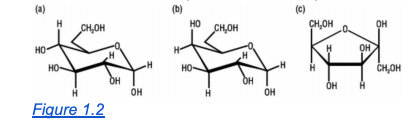
O: The “O” in FODMAP: Oligosaccharides, a type of carbohydrate, is composed of anywhere from 3-10 simple sugars (monosaccharides) in the chain, making them rather small. Oligosaccharides are Fructans (fructo-oligosaccharides, FOS) and Galactooligosaccharides (GOS). The chemical structures shown below in Figure 1.2 are the 3 common monosaccharides that make up oligosaccharides.
This is where the importance of chemical structure takes place. As described previously, the small intestine digests and absorbs nutrients (such as oligosaccharides) via breakdown of bonds using digestive enzymes. However, this breakdown simply cannot take place with certain oligosaccharides (such as FOS and GOS), as they are built from small sugars and amylase (digestive enzyme). The small sugars and amylase will not fully function any further in the breakdown. Some humans lack the enzyme able to break down these oligosaccharides, making them unable to be digested. Galacto-oligosaccharides are found abundantly in beans, lentils and chickpeas. Fructans can be found in artichoke, asparagus, onions, leeks, garlic, broccoli, brussels sprouts.
D: The “D” in FODMAP: Disaccharides are carbohydrate molecules with only 2 monosaccharides. There are numerous disaccharides, but the three major disaccharides are sucrose, lactose, and maltose. Only some are able to be broken down by enzymes. Amylase (digestive enzyme- found in saliva) can break down maltose (type of disaccharide); however, lactose (milk sugar) cannot be as easily broken down. Being unable to digest lactose is due to having insufficient levels of lactase being produced in the small intestine.
Roughly 65% of the world’s population is lactose intolerant, with some populations (Native Americans) being up to 79% lactose intolerant. The remaining ~30% of the population is able to digest lactose due to “mutation” over the years. Our bodies stop producing lactase at around 5 years old; however, this has not stopped the human consumption of milk past this age. These “mutations” to lactose vary from factors like genetics, ethnicity, and other gut disorders. This ability (mutation) to digest lactose in adulthood, known as lactase persistence (LP), is caused by an inherited autosomal dominate MCM6 gene. If the mutated gene is inherited, your body is able to produce sufficient lactase into adulthood (1).
Lactose is found mainly in dairy products like milk, butter, cheese, yogurt, and creamsbut can be hidden as ingredients in bread, salad dressings, and baked goods.
M: The “M” in FODMAP: Monosaccharides, commonly known as “simple sugars”, are one of the most basic forms of sugar and contain single chains of carbon. As seen in Figure 1.2- Glucose, Fructose and Galactose are monosaccharides that are the building blocks for disaccharides (sucrose and lactose) and polysaccharides (cellulose and starch). Fructose, a simple sugar, does not require digestion when there is more glucose. However, if there is more fructose than glucose, an alternative absorption method is needed. This is where indigestion can occur in some individuals who have an impaired absorption, leading to fructose malabsorption (2). Common foods containing monosaccharides are apples, asparagus, artichokes, ripe bananas, cherries, grapes, honey, high fructose corn syrup, mangoes, pears, and watermelon.
P: The “P” in FODMAP: Polyols are sugar alcohols with a general formula of (HOCH2[CH(OH]nCH2OH). Their absorption is generally slow across the intestinal barrier, with only about ⅓ actually being absorbed.
Common polyols include the artificial sweeteners sorbitol, mannitol, maltitol, and xylitol. **added into foods/chewing gums because they taste sweet**
Common foods include apples, apricots, avocados, blackberries, cherries, cauliflower, peaches, pears, mushrooms, and nectarines.
Who Should Try a Low-FODMAP Diet?
Now that we have gone over the details of these specific types of carbohydrates, they all share common characteristics: poor intestinal absorption, excess water into the intestine and rapid bacteria fermentation (3).
FODMAPS are not always the negative source of an individual’s digestive health. They can be an excellent source of micronutrients (vitamins and minerals). Therefore, when assessing who is at a higher risk of FODMAP intolerance, it depends on numerous factors such as quality consumed, individual tolerance and genetics. If any of these factors are at play, this is when symptoms of increased bloating, gas, abdominal pain, diarrhea, or just overall digestive pain maybe experienced.
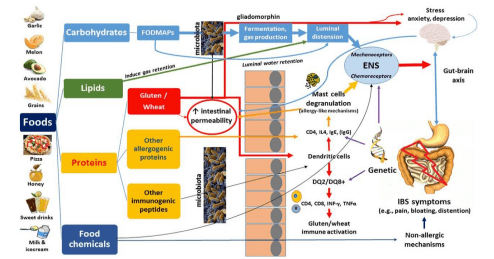
Irritable Bowel Syndrome (IBS) is one of the most common functional bowel disorders that affect the large intestine. IBS is a chronic condition that causes abdominal pain and bloating that can be exacerbated from certain foods. Wheat and Fructans are regarded as the most common food triggers for IBS, which may qualify an IBS sufferer for a low FODMAP diet. Shown below in Figure 1.3 is the process in which these certain foods can trigger IBS symptoms of abdominal pain and bloating.
** While the above statements are scientifically proven to make one a good candidate for a low FODMAP diet, it is always important to consult a medical professional to rule out celiac disease, cancer, food allergies or intolerances, or any other health conditions/life threatening diseases or disorders before starting a new diet.**
How to start a Low FODMAP Diet:
Starting a low FODMAP diet may feel intimidating due to the amount of foods needed to eliminate from your diet; however, one way is to first eliminate your major FODMAP irritants first. After eliminating the major FODMAP irritants, you can then move on to the other FODMAPs that cause you the least gastrointestinal distress. Starting a low FODMAP diet this way may help those who have a hard time adjusting to a new diet. If you can handle it, a better way is to start off eliminating all FODMAPs from your diet, but only if you feel you are ready to do so.
It is important to follow the low FODMAP diet from six to eight weeks then move into a reintroduction period. The reintroduction period should be a gradual shift, starting with the reintroduction of FODMAP containing foods that have caused you the least amount of gastrointestinal distress. It is important during this time to keep the reintroduced food portions small, then gradually increase the serving size if tolerated. For example, if reintroducing avocado into your diet, start with one-eighth of an avocado on day 1, then increase to two-eighths on day 2, three-eighths on day 3, etc. Only increase serving size if reintroduced food is tolerated. If it is not tolerated, then eliminate specific food again from diet until gastrointestinal distress has decreased, then reintroduce food again but in smaller portion. Keeping track of signs and symptoms of gastrointestinal distress is vital in order to pin what foods are causing you trouble. It is recommended to keep a food journal and track which foods and amounts you are consuming, and when [how long after consuming] your gastrointestinal symptoms occur [if any].
The reasoning behind the importance of the reintroduction of FODMAPs is because if these foods are restricted for long periods of time, it can increase one’s risk of developing nutrition deficiencies. Because FODMAPs are found in foods like fruits and vegetables, nutrition deficiencies such as fiber, minerals like calcium, and vitamins A, C and D can occur. It should also be noted that this is called a low FODMAP diet and not a no FODMAP diet. It was designed to help manage symptoms, not cure them completely.
Low FODMAP Clinical Trials:
Clinical Trial #1: Low FODMAP Diet vs Modified Diet
This study was conducted on 92 adult patients with IBS-D (irritable bowel syndrome with diarrhea) with the median age of 42.6 years. Each patient was randomly assigned either a low FODMAP diet or diet recommendations from the British National Institute for Health and Care Excellence (modified NICE diet) for a four-week period. The mNICE diet consists of eating smaller, more frequent meals, limiting caffeine and alcohol, and avoid trigger foods of the patient choice. Each patient who received their randomized diet met with a Registered Dietitian during the four-week period, where they were counseled on their specific diet. After the four-week period, only 84 patients had successfully completed the study, where 45 were on the low FODMAP diet and 39 on the mNICE diet. The results of the study were in favor of the low FODMAP diet due to a greater decrease in IBS-related symptoms and an increase in quality of life. Also, anxiety scores were decreased more in the low FODMAP diet patients.
Clinical Trial #2: Low FODMAP Diet vs Typical Diet
This study was conducted on 30 individuals with IBS and 8 healthy individuals who were randomly assigned a 21-day diet low in FODMAPS or a typical Australian diet. The subjects consuming a low FODMAP diet were required to consume less than 0.5g of FODMAPs per meal. The study resulted in the low FODMAP diet individuals having greater reduced gastrointestinal symptoms, where the typical diet individuals did not experience a significant result of reduced gastrointestinal symptoms.
FODMAP History + Who Discovered FODMAP:
Australian researchers at Monash University were some of the first to theorize that foods containing these forms of short chain carbohydrates were the source of gastrointestinal issues and worsened digestive disorders like irritable bowel syndrome and inflammatory bowel disease (4). Research was also being conducted on FODMAP containing foods in the 1990’s by Melbourne dietitian Sue Shepard who was seeing great results in her private practice on patients with IBS following a ‘fructose malabsorption’ diet. Information regarding fermentable sugars was limited to none until the early 2000’s when Shepard and Monash University were pushing the envelope of research. It wasn’t long after until 2006 when Monash University gave the low FODMAP diet its name and developed it for patients specifically with IBS (5).
Final FODMAP Thoughts:
In summary of the previously stated clinical trials and scientific research regarding a low FODMAP diet, it’s clear that a low FODMAP diet has shown to be beneficial in helping relieve gastrointestinal symptoms. While a low FODMAP diet is beneficial to get you back on track of your digestive health, it should always be monitored to avoid developing any nutrition deficiencies or rule out any other health complications. While it is highly likely that the foods you consume are the leading culprit of your gastrointestinal distress, it is important to remember that your environment, stress, lifestyle behaviors and genetic components could also be a contributing factor to your health.General Background Information While many will gravitate toward a gluten-free diet in order to improve digestion, some find that it is just simply not enough and only scratching the surface of their health. This is where a low FODMAP diet comes into play when taking control of your digestive issues. FODMAP stands for fermentable oligo-di-mono-saccharides and polyols. They are a classification of short-chain carbohydrates and polyols. These poorly absorbed short chain carbohydrates and polyols display osmotic effects and may be the cause of typical digestion issues people my face such as bloating, gas, and abdominal pain.
 Paleo Around the World